
What Is Dog Socialisation?
People often misunderstand the term ‘dog socialisation’ and think that if their dog plays well with the neighbour’s dog, they are well socialised. That isn’t the case. Dog socialisation is part of this, but dogs need to be able to be comfortable and confident not just with playing with dogs, but in all environments, with all types of people, being handled by owner and others (like a vet), other animals, being alone–all typical day-to-day things – like hairdryers, motorbikes, stairs etc.
Here, we are going to concentrate on the dog socialisation aspect, or in this case, puppy socialisation bears reference to all of the key skills that a puppy needs to learn in order to prepare them with the right tools to be happy, confident dogs that can effectively communicate with others in their social circle.

The Importance of Socialising a Puppy
Caring for a new member of the family is much more than ensuring vaccinations are up to date, toys are bought and the puppy is potty trained. One crucial factor that is overlooked is the importance of socialising a puppy.
The two main reasons for puppy socialisation are:
- There is a limited period of time in which dog socialisation is effective. This is referred to as the puppy socialisation window. For canines, it starts at birth and lasts until they are 16 weeks of age.
- Puppies that are not appropriately socialised tend to grow fearful, reactive and pose many other behavioural-related issues later in life.
There is a saying by Aristotle when referring to a child’s development: ‘Give me a child until he is seven and I will show you the man’. In dog terms, the main character is made by the time they reach four months of age – which is arguably the most informative and important months of a dog’s life.
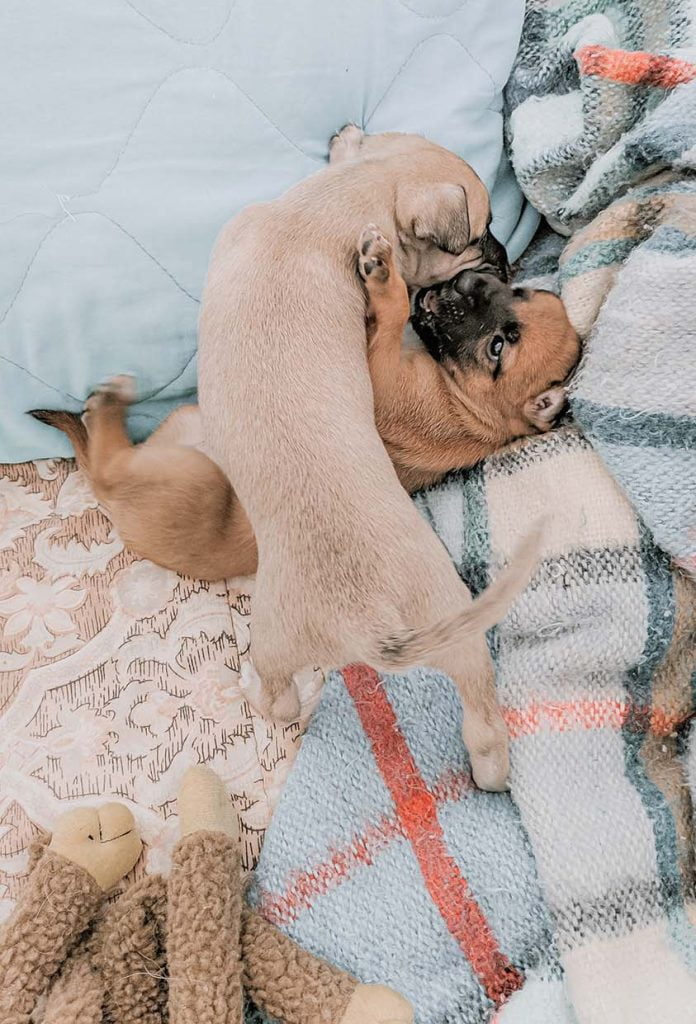
Puppy Power’s Tips for Socialisation With Other Dogs
Below, I’ve compiled some tips from personal experience. I feel it’s the latest information regarding socialisation with other dogs, and it’s also the techniques I’ve found to be most useful for my clients.
Don’t Wait Until Your Puppy is Fully Vaccinated First
It’s true that vets have recommended for years that puppies should avoid contact with other dogs until all their vaccines are up to date. However, in today’s times, the risks of a dog with behaviour issues far outweigh the risk of them contracting diseases.
Avoid Dog Parks, Beaches, Hikes and Similar
Densely dog-populated areas like mentioned above should be avoided, where the risk of contact with unvaccinated dogs is higher.
Host a Puppy Playdate
Host a playdate at your house or find a small communal area and find another pet parent who has a well-socialized dog. They can be a friend you trust or another dog parent from Puppy Power puppy class.
Attend Puppy Socialisation Classes
At Puppy Power, we have a maximum of eight dogs in a class, and you even have the option of having private classes just for you and your puppy. We cover various topics and provide you with actionable solutions such as what is appropriate puppy play, excessive chewing, digging holes in the garden, and going potty in other places than the grass/lawn area.
Let Fido Explore at Their Own Pace
Like humans, puppies each have their own personality and pace of development. Therefore it’s important that you don’t push them to go past their limits when they are not yet comfortable doing so.
When you give your pupper the ability to control their interactions with other dogs and puppies, you’d be amazed at how fast their confidence grows. Remember that just because they are dogs, they all have their own unique character.
Think about when you were at school – not all the kids in your class played the same at break time. Some ran around chasing one another, others sat at the side and observed, and some broke away and had 1:1 time from the rest of the class.

Know When to Ask for Help
If you notice any aggressive behaviour, excessive biting, or barking for no reason, it’s advisable to enlist the help of a professional as soon as possible. They will guide and advise on the best possible course of action to remedy the situation.
The Final Bark
Puppies brains are like little sponges for the first four months of their lives. They have the ability to absorb as much information as what is thrown at them. During this time, you have the best chance possible to form the foundation for the rest of your dog’s life. Therefore you owe it to your doggo and yourself to ensure the basics are in place before you embark on the rest of your journey together!
Gradual, safe and gentle exposure to all things new is critical – try not to ‘flood’ your dog with too much too soon as it may become a negative memory.