
Appropriate Puppy Play - Normal vs Unacceptable
What is appropriate play?
By now, I am sure you are well aware of the importance that puppy play embodies in your puppy’s life. Sure, socialisation is essential, but social exposure with other dogs takes top honours!
While a puppy playing with others is vital for their development, like any other introduction, it needs to be a positive experience for all parties concerned–especially for puppies playing together.

Dogs do speak, but only to those who know how to listen.
Orhan Pamuk
One strong word of advice is to forget what you’ve heard previously that said, “Let them figure it out”. You might be surprised to learn that puppies require us to act as referees during puppy play sessions and intervene when needed when one puppy or the other is not enjoying it.
So what is appropriate puppy play and what isn’t?
6 Signs of Normal Puppy Playtime Behaviour
Puppies playing together can be clumsy and messy at times as they navigate through what is allowed and what isn’t, but most of all–it should be fun! There are many telltale signs of what is deemed as acceptable puppy play, but here are six signs that your pup is having a grand old time–above board:
Proper Puppy Play is Equal
It’s ok for puppies to take turns chasing each other, pinning each other down, and dogs play biting, permitting that the one is not doing all the chasing and pinning down. However, if this is the case, the owner should intervene and stop the session as one pup is bullying the other.
Appropriate Puppy Play is Relaxed
The puppies playing together should all have loose body language, loaded with a goofy grin and a wagging tail! You’ll know it’s time to intervene when a pup’s body stiffens or the tail becomes straight (even if it’s still wagging).
Appropriate Puppy Play is Relaxed
The puppies playing together should all have loose body language, loaded with a goofy grin and a wagging tail! You’ll know it’s time to intervene when a pup’s body stiffens or the tail becomes straight (even if it’s still wagging).
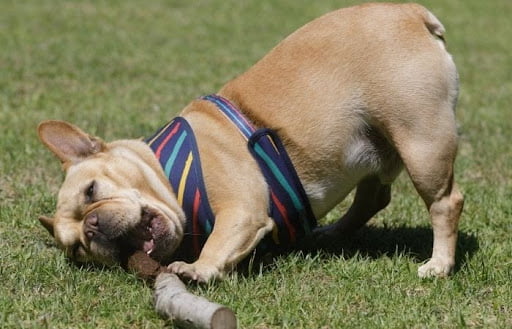
Normal Puppy Play Time Includes Bowing
Pups that are playing with one another will engage in play bowing. This is whereby means of their front ends down, and their back ends in the air; they invite the other puppies for a play session.
Puppy Play is Fun
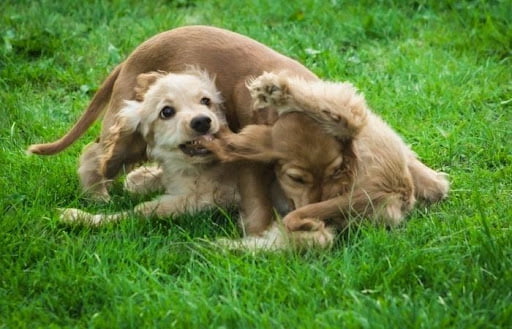
If your puppy keeps going back for more, they are enjoying themselves to the max!
Dogs Play Biting Will Happen
Why do dogs play fight? Because puppies are still learning and developing, you might encounter dogs play biting or mouthing each other. This is entirely normal, permitting that the puppy “being bitten” does not yelp in pain, and the “biter” does let go. Of course, accidents do happen, but the difference is the “biter” needs to know to let go!
What is NOT Acceptable During Puppy Play?
Here are some red flags to look out for when in the vicinity of puppies playing together:
- When what started as relaxed play becomes too intense (louder, faster, aggressive, etc.).
- Humping is not permitted! It’s rude, and instead of it being misconstrued as dog dominance behaviour–it’s actually signs of overstimulation and tiredness.
- No skin or hair/fur pulling. We need to be conscientious of our friends with long locks.
- Mean puppy behaviour such as ganging up on one dog or cornering it won’t do!
- When one dog tries to exit the play session, the others need to let it be. This can include remaining at the water bowl or retreating to its owner.
In the case of head to head pinning, the top dog, or dominant puppy that has its weight on the other dog needs to be removed, calmed away from the other dog and then they should be permitted to play again.
The Final Bark!
Puppy play is a multilayered topic. If you’re ever unsure whether puppy play is appropriate or not–don’t hesitate to do a check-in with Puppy Power. Some quick tips I can share includes:
- Holding back the puppy or dog that is too much for the other.
- If the timid puppy goes to the other one who is being held back–play is OK!
- If the timid puppy remains where they are, or moves away in another direction, then puppy play should cease for the time being!
It’s important to remember that your puppy is still learning. Notably, so, it’s every owner’s responsibility to interpret puppy body language and know how to help their puppy navigate through what is deemed as acceptable behaviour and what is not when it comes to appropriate puppy play!